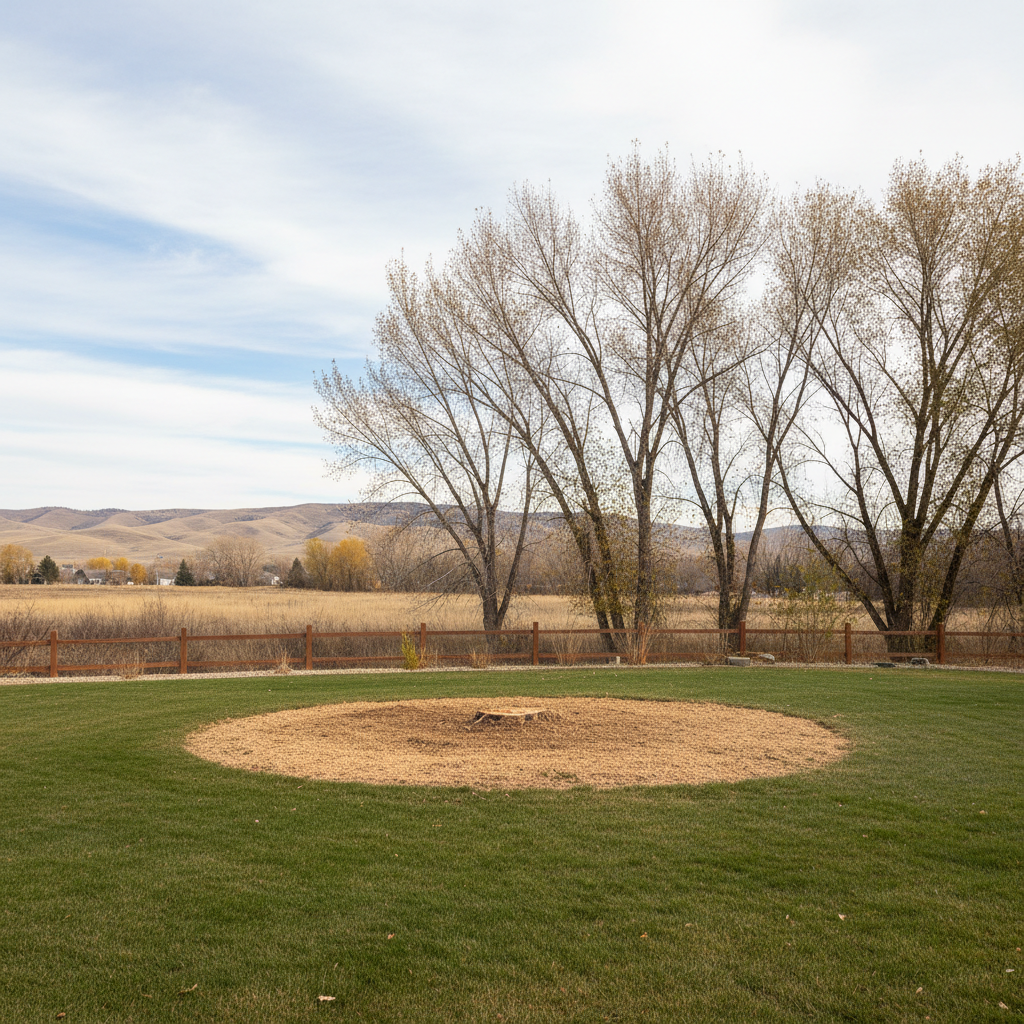
What Happens After the Tree's Gone?
So, you had a tree taken out from your Meridian property. Maybe it was dangerous, or it was sick, or it was just in the way of a new project you had planned. You might think the job is all done, but really, it is just the start of a new part for that spot in your yard. What you do next, and how you watch things, makes a big difference in how that area gets better and grows well.
Here at Allgreen Tree Service Meridian, we do not just cut down trees and then leave. We want to make sure your property stays healthy and looks good long after we have packed up our equipment. Making our work last means taking care of what happens after, especially with Meridian's special climate and soil.
Extending the Life of the Work: Dealing with the Stump and Site
First things to talk about: the stump. If you picked stump grinding, that is usually the cleanest choice. It grinds the stump down several inches below the ground level, and this lets you plant grass, or shrubs, or even a new, smaller tree right over it. If you did not get it ground, you have a couple of choices, but you should know this: a stump can take anywhere from 3 to 10 years to break down naturally, and sometimes it takes even longer for hardwoods.
- Natural Decomposition: If you are patient, nature will do its thing. Softer woods, like pine, break down faster than tough hardwoods such as oak or hickory. You can try to make it go faster by drilling holes into the stump, and adding nitrogen-rich fertilizer or Epsom salt, and keeping it moist and covered. This helps fungi and bacteria do their job. Just know that it is not a quick fix, and you will still be looking at months to years for this in Meridian.
- Chemical Accelerants: There are products made to speed up stump decay, and these often have potassium nitrate. They can help make the wood softer over 6 to 18 months. But you have to be careful with these products, especially if you have pets, or kids, or a garden nearby, and you definitely need to keep them away from waterways in Meridian.
- Backfilling and Planting: Once the stump is gone or ground down, you will need to fill the area back in with good quality soil. Meridian's soil is often a silt loam, but it can be alkaline. Adding organic matter is very important here; it helps make the pH lower, and it makes the soil hold moisture better, and it gives nutrients. This is key for anything you plan to plant there in Meridian.
Regular Maintenance: Keeping the Area Healthy
After a tree removal, regular maintenance is all about helping the health of the plants around and stopping new problems. Here is what I recommend for your Meridian property:
- Watering: Even if you are not planting something new right away, keep the soil around where the tree used to be watered enough, especially during our hot, dry Meridian summers. This stops the soil from getting too dry and can help any root pieces left behind break down.
- Monitor for Sprouts: Some tree types, especially those that sprout easily, might try to grow from roots that are still there. If you see small shoots popping up, cut them back fast. This takes energy away from the roots and helps them die off quicker. This is important for Meridian homeowners.
- Soil Health: Regularly putting compost or other organic materials into the soil is a good idea in Meridian. Our alkaline soils can sometimes keep nutrients from plants, so making the soil structure and nutrient availability better is always a good thing to do for your Meridian yard.
- Pest and Disease Watch: An area that is under stress can get pests or diseases more easily. Keep an eye out for anything strange on plants nearby. At Allgreen Tree Service Meridian, we know what to look for.
Warning Signs of Problems
You have had a tree removed in Meridian, but sometimes problems can show up later. Knowing what to look for can save you a lot of trouble:
- Unusual Growth: If you see mushrooms or other fungi growing a lot from the ground where the tree once stood, especially if they are close to your house or other buildings, it could mean a lot of root decay is happening deeper than you thought. While fungi help things break down, big mushrooms might mean there is a lot of wood rotting underground. This is something Allgreen Tree Service Meridian can help with.
- Sinkholes or Uneven Ground: As big roots break down underground, they leave empty spaces. This can make the ground above settle and create dips or sinkholes. This happens more with bigger trees that had very large root systems in Meridian.
- Pest Infestations: Wood that is rotting attracts pests like termites, ants, and beetles. If you notice more of these insects around the spot where the tree used to be, that is a bad sign. Bark beetles, for example, are common in Idaho and can attack weak trees. Allgreen Tree Service Meridian can advise on these issues.
- Poor Growth of New Plants: If you have planted new grass or shrubs in the area and they are not doing well – like yellow leaves, not growing much, or wilting – it could be because of bad soil, or not enough nutrients, or even diseases left over from the old tree. Chlorosis, which is when leaves turn yellow because of not enough iron, is common in Idaho's alkaline soils.
When to Call a Professional
Knowing when to call someone for help is very important for your Meridian property. While some maintenance you can do yourself, certain situations definitely need a professional:
- Persistent Pest Problems: If you are seeing many termites, or carpenter ants, or other insects that bore into wood, especially if they seem to be moving towards your house in Meridian, do not try to fix it yourself. An arborist or a pest control specialist can check out the situation and tell you what treatments are needed.
- Large Sinkholes or Structural Concerns: If the ground around the old tree spot is sinking a lot, or if you are worried about damage to the foundation of buildings nearby, get a professional out there. This is not just about how it looks; it can be a safety problem for your Meridian home.
- Unexplained Plant Health Issues: If new plants are always failing even after you have tried your best, an arborist can figure out if there are problems with the soil, or not enough nutrients, or diseases from the old tree that might be affecting the area. Diseases like anthracnose or verticillium wilt are in Meridian and can affect many different plants.
- Hazardous Regrowth: If the old stump or roots are sending up strong, woody sprouts that are hard to control, a professional can use stronger treatments or grind the area again to make sure the tree is truly gone from your Meridian property.
- You Just Want It Done Right: Sometimes, you just want to feel good about it. If you are not sure about anything with the care after a tree removal, or if the job feels too big, call us at Allgreen Tree Service Meridian. We are happy to come take a look and give you honest advice. That is what we do for our Meridian customers.
Taking care of your property in Meridian after a tree removal is not fancy, but it is important. A little attention now can stop bigger problems later and keep your Meridian yard looking its best.