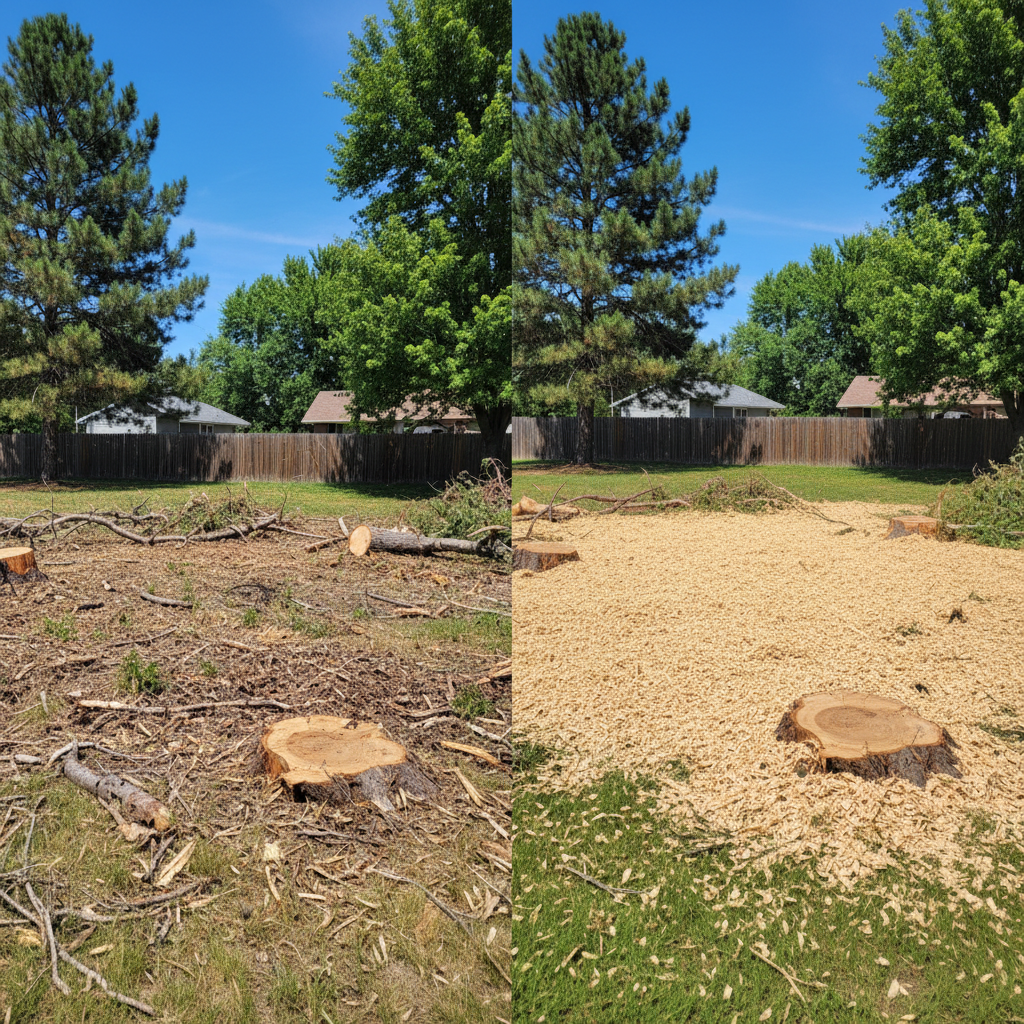
Alright, Meridian homeowners, let's talk about something nobody wants to deal with: a tree emergency. You know the drill – a big windstorm blows through, maybe some heavy snow like we got last winter, and suddenly you've got a limb through your fence, or worse, a whole tree leaning precariously towards your house. It's a stressful situation, and your first thought is probably, "What now?"
When you're facing a damaged tree, you essentially have two main paths: try to save it (repair) or cut your losses and remove it entirely (replace). Both have their pros and cons, and what's right for your neighbor in the North End might not be right for you out near Eagle Road.
Option 1: Repairing a Damaged Tree
Sometimes, a tree can be saved. This usually applies to trees that have suffered partial damage – maybe a large limb broke off, or there's a significant split in the trunk, but the tree's overall structure and health are still decent. When I talk about 'repair,' I'm generally talking about professional pruning, cabling, or bracing.
- Cost: Repairing a tree can often be less expensive upfront than a full removal, especially if it's just a few large limbs that need careful pruning. Cabling and bracing, which use steel cables or rods to support weak limbs or split trunks, also tend to be cheaper than removal.
- Durability: This is where it gets tricky. A repaired tree might look good for a while, but it's often compromised. That wound from a broken limb? It's an open invitation for pests and disease. A cabled tree is only as strong as its weakest point, and while the cables provide support, they don't heal the underlying structural issue. You're essentially managing a weakness, not eliminating it.
- Maintenance: A repaired tree will almost certainly require more ongoing maintenance. You'll need to keep a close eye on those wounds, check the integrity of any cables or braces, and probably have it inspected more frequently by an arborist. It's an investment of time and money over the long haul.
- Appearance: A skilled arborist can do wonders to make a repaired tree look good. They'll prune for balance and aesthetics. However, a tree that's lost a major limb will always have a different silhouette, and sometimes, the cabling or bracing hardware can be visible. It might not be the perfect specimen it once was.
Option 2: Removing and Replacing the Tree
This is the more drastic option, but often the most practical and safest in the long run. If a tree has sustained severe damage – say, more than 50% of its crown is gone, the main trunk is extensively split, or it's leaning dangerously towards a structure – removal is usually the best bet.
- Cost: Upfront, removal is typically more expensive than a simple repair. You're paying for specialized equipment, skilled labor, and the disposal of a large amount of wood. However, if you factor in potential future repairs, ongoing maintenance, and the risk of further failure, it can sometimes be the more economical choice over time. Plus, if you're replacing it, you've got the cost of a new tree.
- Durability: When you remove a damaged tree and plant a new, healthy one, you're starting fresh. You get a tree with a strong, intact structure that's less prone to immediate failure. You can choose a species that's well-suited to Meridian's sometimes tricky clay soil and climate, ensuring it has the best chance to thrive.
- Maintenance: A newly planted tree will need care – watering, proper mulching, and initial structural pruning. But once it's established, a healthy, young tree generally requires less intensive intervention than a compromised older one. You're building a foundation for future low-maintenance beauty.
- Appearance: Yes, you lose the mature tree. That's the biggest downside for most folks. But you gain the opportunity to choose a new tree that perfectly fits your landscape design, provides the right kind of shade, and enhances your property's curb appeal for decades to come. You can select a species known for its beauty and resilience.
My Recommendation for Meridian Homeowners
Look, as someone who's spent years dealing with trees in this valley, I've seen it all. My honest recommendation? If a tree is severely damaged, especially if it's large and close to your home or other structures, it's almost always better to remove it and replace it. Trying to save a severely compromised tree is often just delaying the inevitable, and it can be a safety hazard. That old saying, "an ounce of prevention is worth a pound of cure," definitely applies here.
You'll sleep better knowing there isn't a ticking time bomb in your yard. Plus, planting a new tree is an investment in your property's future, giving you control over its health and appearance. We've got some great nurseries around here, and you can pick a species that'll thrive in our local conditions.
Of course, every situation is unique. If you're wrestling with this decision, give us a call at Allgreen Tree Service Meridian. We'll come out, assess the damage, and give you an honest opinion on what's best for your specific tree and your property. We're here to help you make the safest, most cost-effective choice.