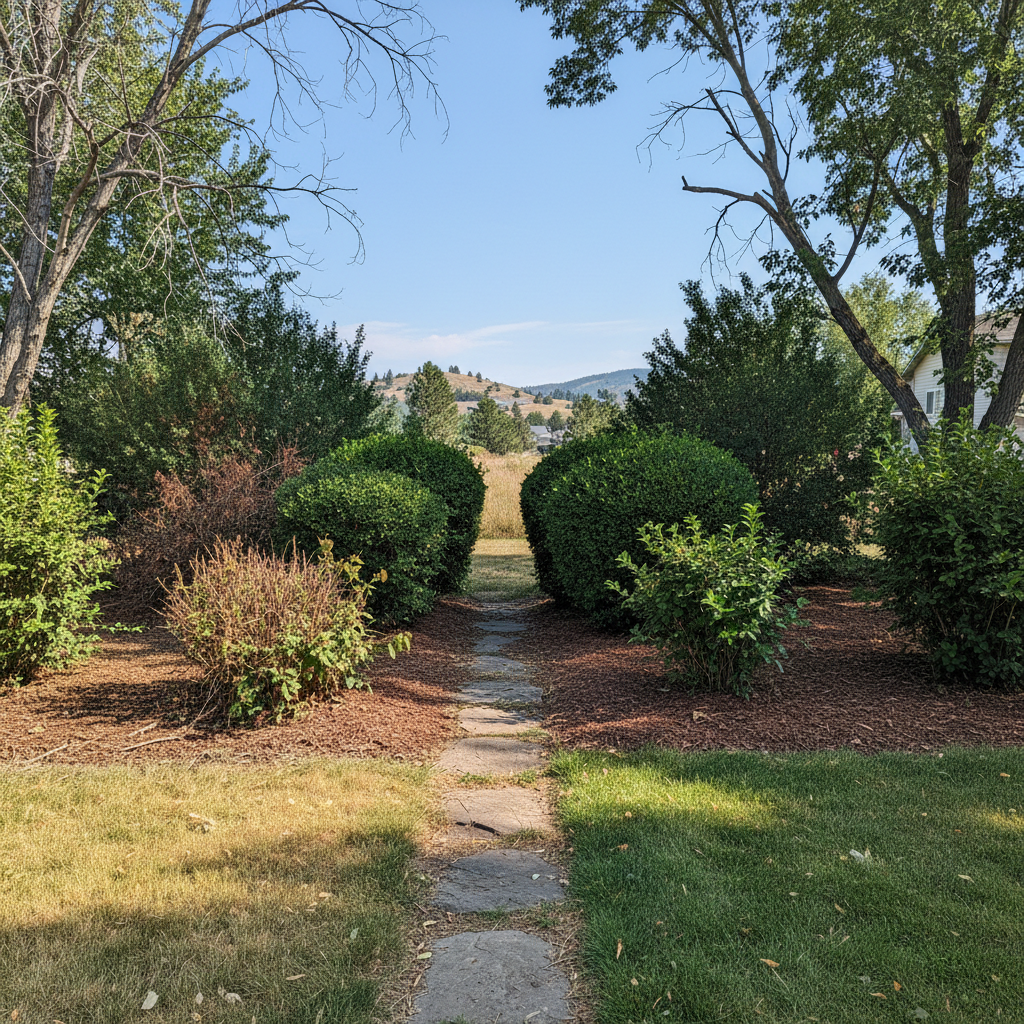
You've got shrubs and bushes around your house, right? Maybe they're foundation plantings, a privacy hedge, or just some nice accent pieces. Sooner or later, they're gonna need a trim. But here's the thing: there are two main ways folks go about it, and they're pretty different. I'm talking about shearing versus selective pruning. As a guy who's been working on landscapes all over Meridian for years, I've seen the good, the bad, and the ugly of both methods. Let's get into what each one means for your plants and your wallet.
Shearing: The Quick & Tidy Look
Shearing is probably what most people picture when they think about trimming. It's when you take hedge trimmers – electric or gas – and just buzz the outside of the plant into a neat, uniform shape. Think perfectly squared-off hedges or rounded meatballs. It's fast, it's efficient, and it gives you that really clean, manicured look.
The Good Stuff About Shearing:
- Speed: You can knock out a lot of shrubs in a short amount of time. If you've got a big hedge, this is definitely quicker.
- Appearance: For a formal, geometric look, shearing delivers. It creates a dense outer layer of foliage that looks really tidy.
- Cost: Because it's faster, it usually costs less if you're hiring someone like us at Allgreen Tree Service Meridian. Less time on the job means a smaller bill.
The Not-So-Good Stuff About Shearing:
- Plant Health: This is where shearing can get tricky. When you constantly shear, you're only cutting the outer growth. That encourages a dense layer of leaves on the outside, but it can shade out the inner parts of the plant. Over time, you end up with a hollow plant that's woody inside and only has leaves on the surface. This 'shell' can become weak and prone to breaking, especially with our heavy winter snows here in the Treasure Valley.
- Bloom Reduction: Many flowering shrubs bloom on old wood. If you're constantly shearing off the tips, you're often cutting off the flower buds for next year. Say goodbye to those beautiful spring blooms on your Forsythia or Lilacs.
- Frequent Maintenance: That dense outer growth needs more frequent trimming to maintain its shape. You'll be doing it more often to keep that crisp look.
- Pest & Disease: The dense outer layer can also reduce air circulation, making it a cozy spot for pests and fungal diseases to thrive.
Selective Pruning: The Healthy & Natural Approach
Selective pruning, sometimes called hand pruning or structural pruning, is a more thoughtful process. Instead of just buzzing the outside, you're looking at each branch and making cuts strategically. You're removing dead, diseased, or crossing branches, and thinning out the canopy to allow light and air into the plant's interior. You're also cutting back to a side branch or a bud, aiming to maintain the plant's natural shape and promote healthy growth.
The Good Stuff About Selective Pruning:
- Plant Health: This is the big one. Selective pruning promotes strong, healthy growth from the inside out. It encourages air circulation, light penetration, and a robust internal structure. Your plants will live longer and be more resilient.
- Better Blooms: By understanding how your specific shrub blooms, you can prune to maximize flower production. You're removing old, unproductive wood and encouraging new, vigorous growth that will produce more flowers.
- Natural Beauty: It allows the shrub to grow into its natural, intended shape, which often looks more organic and beautiful in the landscape. It's less 'cookie-cutter' and more 'garden magazine.'
- Less Frequent Maintenance: While it takes more time to do initially, properly pruned plants often need less frequent trimming because their growth is more balanced and directed.
The Not-So-Good Stuff About Selective Pruning:
- Time & Skill: This isn't a quick job. It takes more time, more knowledge about plant growth, and a keener eye. You need to know what you're cutting and why.
- Cost: Because it's more labor-intensive and requires more skill, it typically costs more if you're hiring a professional.
- Appearance: If you're really after that super formal, geometric look, selective pruning won't give you that perfectly straight line. It's a more natural aesthetic.
My Recommendation for Meridian Homeowners
Alright, so what's the verdict for folks here in Meridian? Given our climate, our soil (which can be pretty heavy clay in some older neighborhoods), and the types of plants we commonly use, my clear recommendation is selective pruning for most shrubs and bushes.
Here's why: We get hot, dry summers and cold winters with snow and ice. Plants that are healthy and structurally sound handle these extremes much better. A hollow, sheared shrub is more likely to break under a heavy snow load or suffer from heat stress when the sun's beating down on its exposed inner branches. Plus, a healthy, well-pruned plant is more resistant to the common pests we see around here.
Now, I get it. If you've got a formal hedge that absolutely needs to be a perfect rectangle, shearing might be your only option. But even then, I'd suggest incorporating some thinning cuts every few years to try and maintain some internal health. For everything else – your flowering shrubs, your foundation plantings, your evergreens – selective pruning is the way to go.
It's an investment in the long-term health and beauty of your landscape. You'll have happier plants, more flowers, and ultimately, less headache down the road. If you're not sure how to tackle it yourself, or just don't have the time, give us a call at Allgreen Tree Service Meridian. We're happy to help you figure out the best approach for your specific plants and get them looking their best.